
The bosses of SBI, Union Bank and Central Bank have been driving down to their offices everyday to take stock of the biggest loan drive ever undertaken for MSMEs, discovers Tamal Bandyopadhyay.

'The economy is expected to bounce back and things are expected to recover faster than what we previously thought.'

After the finance minister directed public sector banks to join the account aggregator (AA) ecosystem, 5-6 major ones, including State Bank of India (SBI) and Bank of Baroda are expected to go live by July-end. Sahmati, an industry alliance for the AA ecosystem, has been working with PSU banks to get them onboarded for quite some time now. So far, Union Bank of India and Punjab National Bank (PNB) have gone live on the AA ecosystem. While Union Bank has been live for a while, PNB went live earlier this month.

The government is set to ask PSBs to expeditiously introduce repo-rate linked products "to step up affordable credit".

Even as you fight the ongoing health challenge, here are some tips to strengthen your personal finance in the time of coronavirus.

The RBI has this year cut interest rates by 110 basis points in four instalments but banks have passed only a part of it to borrowers. Before the last reduction earlier this month of 35 basis points, the bank on an average had passed only 29 basis points out of 75 basis points cut affected during 2019.
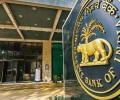
The Reserve Bank on Monday superseded the boards of Srei Infrastructure Finance as well as Srei Equipment Finance, citing concerns over governance and payment defaults, and decided to refer the two NBFCs for resolution under the insolvency law. This is only the second time in as many years that the Reserve Bank of India (RBI) is referring entities for the resolution process under the Insolvency and Bankruptcy Code (IBC) after taking first ever such step in the case of DHFL back in 2019. Superseding the boards of the crisis-hit Srei Infrastructure Finance Limited (SIFL) and Srei Equipment Finance Limited (SEFL), the RBI has appointed Rajneesh Sharma, former Chief General Manager of Bank of Baroda as the administrator to manage the affairs of the two companies.

Finance Minister Nirmala Sitharaman on Tuesday unveiled a Rs 39.45 lakh crore Budget with a view to fire up the key engines of the economy to sustain a world-beating recovery from the pandemic. This was Sitharaman's fourth Budget. While the taxpayers were left in the lurch, once again, was she able to cheer Corporate India?

Fitch Ratings on Wednesday cut India's growth forecast to 10 per cent for the current fiscal, from 12.8 per cent estimated earlier, due to slowing recovery post second wave of COVID-19, and said rapid vaccination could support a sustainable revival in business and consumer confidence. In a report, the global rating agency said the challenges for banking sector posed by the coronavirus pandemic have increased due to a virulent second wave in the first quarter of the financial year ending March 2022 (FY22). "Fitch Ratings revised down India's real GDP for FY22 by 280bp to 10 per cent, underlining our belief that renewed restrictions have slowed recovery efforts and left banks with a moderately worse outlook for business and revenue generation in FY22," it said. Fitch believes that rapid vaccination could support a sustainable revival in business and consumer confidence; however, without it, economic recovery would remain vulnerable to further waves and lockdowns.

In order to make it hassle-free, various start-up support groups such as TiE (The Indus Entrepreneur) and India Angel Network (IAN) are partnering with the digital NBFCs to extend debt finance to their member companies.

Former RBI governor R Gandhi said that the RBI needs to re-introduce a one-time restructuring package and mere moratoriums will not suffice in unprecedented times like the COVID-19 pandemic.

The BJP hailed teh package, saying it reflected the government's commitment towards creating jobs and stimulating the economy.

Direct economic stimulus measures such as tax cuts for individuals and industry would have helped to prop up the Indian economy which was hit hard by the lockdowns across several states in India, say economists and corporate leaders. While the measures announced on Monday are focussed more on the supply side, these steps would take a lot of time to move the needle for the economy.

RBI Governor Raghuram Rajan on Tuesday said the Finance Ministry's decision to provide more capital to PSU banks will lower the borrowing cost and increase their capacity to lend, besides promoting investments.

The RBI had on August 7 announced a five-member expert panel under former ICICI Bank chairman Kamath to make recommendations on the required financial parameters for recasting corporate loans.
The major beneficiaries of loan recasting will be sub-Rs 500 crore corporate exposures and retail exposures, which were earlier expected to see the highest increase in NPAs in percentage terms.

With the world's worst outbreak of COVID pandemic stalling a nascent economic recovery, the government has begun assessing the impact of the second wave of infections on different sectors and may look at providing support at an appropriate time to segments requiring fiscal help. Some of the economic indicators, including the Goods and Services Tax (GST) collections, still provide confidence and incoming data will throw some more light on the state of the economy, sources said. Services sectors like hospitality, tourism and aviation which had just started recovering were hit hard by the second wave of COVID, the sources said, adding these segments might need some support on an urgent basis from the government.

Banks are set to sell dud-loans worth Rs 90,000 crore of 22 firms in the first tranche to the National Asset Reconstruction Company (NARCL). It's reason for cheer given that such sales to asset reconstruction companies (ARCs) have been poor in recent times. In fiscal 2020, their assets under management (AUM) contracted by 4 per cent; and in fiscal 2021, it fell by another 100 basis points to Rs 1.07 trillion. So, why are we where we are?
'If the government spends Rs 10 lakh crore this year then you would be looking at a GDP growth of minus 5 per cent.' 'If you do not do this, you will be looking at GDP growth between minus nine and minus 10 per cent.'

The government's Rs 20.97 lakh crore COVID-19 package lacks in addressing the immediate concerns of the economy as the actual fiscal impact of the additional stimulus is only about 1 per cent of the GDP as opposed to the claim of 10 per cent, Fitch Solutions said on Tuesday. Prime Minister Narendra Modi on May 12 announced a stimulus package of Rs 20 lakh crore, or nearly 10 per cent of GDP, to deal with the economic fallout of COVID-19. The contents of the package were broad-based and announced in five tranches.

India Inc on Tuesday expressed disappointment over the Reserve Bank increasing the key rate by 0.25 per cent and hoped that banks would refrain from hiking lending rates as such a move will scuttle economic recovery.

All real estate developers may not be able to avail the benefit of Reserve Bank of India's one-time restructuring scheme as they might not meet the required financial ratios and have the necessary credit rating, HDFC vice chairman and CEO Keki Mistry said. He was speaking at a real estate and infrastructure investor summit organised by Naredco. "Restructuring may not necessarily help every developer because not too many will be able to meet the criteria laid down in terms of meeting the various ratios and getting credit ratings," Mistry said.

'Today, bankers don't want to take risks as the good decisions taken by them were not protected.' 'There is risk involved in all decisions, like businessmen taking risks in their businesses.' 'A banker must have taken a decision when the economic condition was different, and you cannot question him on the basis of the present situation in hindsight.' 'Naturally, this has affected the morale of bankers.'

Since December 2018, monetary policy has been eased substantially by RBI with policy rates being cut by 75 bps and policy outlook being changed to 'accommodative'.

PSB chiefs tried to argue that liquidity is in surplus in the system and the problem was related to lack of demand in the economy, instead of banks' reluctance to lend, but 'the FM said it is a perception issue that loan is not available, which we need to dispel,', reports Somesh Jha.
Record liquidity infusion by the central bank in the banking system during the financial year 2020-21 amid sluggish economic activity resulted in banks investing more in safe government papers than in extending loans, data from Reserve Bank of India (RBI) showed. This trend has not been seen in nearly two decades, barring 2016 - the year of demonetisation.

Modi, after delivering his sixth straight address to the nation on Independence Day from the ramparts of the Red Fort in New Delhi, went into a brainstorming session with Sitharaman and all top officials in her ministry, sources privy to the development said. T
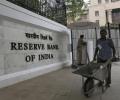
In all, RBI has cut interest rates by 110 bps this year. But this has not yet led to a boost in economic activity. While the growth rate has slowed to a five-year low, consumer confidence is waning and foreign direct investment has plateaued.

'Rather than cutting and pasting from advanced economies, we should use basic economic principles to think about what is right for India at the stage of development at which we are,' says Chief Economic Advisor Krishnamurthy Subramanian.

'One way of doing this could be offering credit guarantee to the banks, say 10 per cent, for fresh loans given to micro, small and medium enterprises,' observes Tamal Bandyopadhyay.

'I have tried to make it easier for the small scale entrepreneur to do business and cut through the red tape.'

Indian economy was growing faster than the global average and all other major economies: FM

'The situation is quite terrifying as you have no job creation and there will be loss of jobs.'

'The current economic contraction is certainly due to the lockdowns as a response to the pandemic, which is an act of God.' 'Nobody has seen such a thing in the last 100 years.' 'Saying that this was an act of mismanagement is largely incorrect'

Over 75 per cent of the bank's Rs 175 crore NPA arises from Uttar Pradesh, Madhya Pradesh and Maharashtra.

'When the country is jobless, why should I pay through my nose to feed these people who want some perks in office?' 'Let them also join India's unemployed.' 'Let them also taste the bitter medicine of being jobless.'

'Infusion of fresh capital, handsome growth in deposits and focus on recovery should bring Yes Bank back on the growth path in the next financial year,' observes Tamal Bandyopodhyay.

'Slowing down of the economy was mainly due to the demonetisation shock...' 'If you cut off the oxygen supply to a patient in the ICU and the patient dies, the patient does not come alive again when you restore the oxygen supply.'

Once these banks start showing losses, they will not be able to pay dividends to the government nor pay taxes, which will further aggravate the situation for the government as its return on investment as an investor would be very negligible for the next few years, says M V Subramanian.

Nitin Desai suggests some concrete measures to revive investment and boost growth.
